
Master of Arts in Education
- Campus: Online
- Credit hours: 30
- Program length: 10-18 months
- Cost per credit: $720
Online Master’s Degree
Designed for educators and creative professionals, Maine College of Art & Design’s Master of Arts in Education (MAEd) helps you strengthen your teaching practice, expand your impact, and advance your career through an interdisciplinary curriculum rooted in the arts.
Program Overview
The online Master of Arts in Education (MAEd) prepares educators, artists, and community practitioners to design inclusive learning experiences that integrate contemporary art, educational theory, and community engagement. The program emphasizes equity, reflective practice, and the role of the arts in shaping meaningful learning across diverse educational and cultural settings.
The MAEd is well-suited for professionals working in schools, museums, nonprofits, human services, and community-based organizations who want graduate-level training to strengthen curriculum design, build leadership capacity, and develop projects that respond to real-world needs.
Curriculum & Courses
Program Requirements
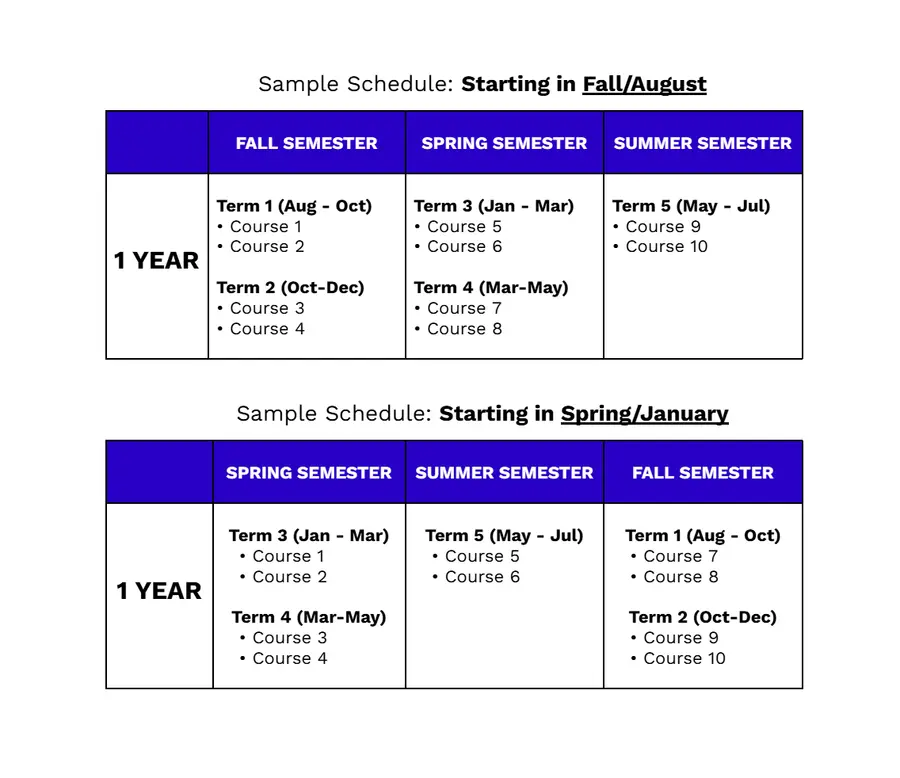
The MAEd is a 30-credit graduate degree that blends core coursework, electives, and a capstone experience to support creative, community-centered education. Asynchronous courses are offered in accelerated eight-week e-terms, with five e-terms each year across Fall, Spring, and Summer. You can complete the degree in 10–18 months, depending on your pace and course load.
Program structure includes:
- 12 credits of core required courses
- 12 credits of elective courses
- 6-credit capstone experience
Please note: this program does not lead to teacher certification.
Degree Focus Areas
Students may use their elective coursework to build toward a focused area of study or design a custom path aligned with their professional goals.
Expressive Arts Therapy Focus
This focus consists of four elective courses that provide additional training for art educators, classroom teachers, human services professionals, and fine artists interested in expressive, arts-based approaches to learning and well-being. Coursework emphasizes the relationship between creative practice, emotional intelligence, and human development. Students explore theory and applied techniques that support empathy, self-awareness, and holistic engagement across educational and community settings, leaving with practical tools to meet learners where they are.
Arts Leadership and Administration Focus
This four-course elective focus prepares students to lead and manage arts organizations across a range of contexts. Coursework addresses governance and leadership, budgeting and finance, fundraising, marketing, and arts advocacy. The curriculum combines conceptual understanding with practical application, helping students develop the skills needed to guide organizations, manage resources, and advance mission-driven work.
Self-Designed Focus
Students may create a custom program of study by selecting electives that align with their individual interests, professional background, and career goals.
Core Required Courses
| 3 | |
| 3 | |
| 3 | |
| 3 |
ELECTIVE COURSES (CHOOSE 4)
| 3 | |
| 3 | |
| 3 | |
| 3 | |
| 3 | |
| 3 | |
| 3 | |
| 3 | |
| 3 |
CAPSTONE EXPERIENCE (CHOOSE ONE)
The 6-credit capstone integrates research, creative practice, and community engagement in a culminating project tailored to each student’s goals.
Students choose one of the following options:
| 6 | |
| 6 | |
| 6 |
Learning Outcomes
Graduates of the online MAEd program will be prepared to:
- Design inclusive, student-centered learning environments
- Integrate contemporary art and social issues into curriculum and programming
- Embed social-emotional learning (SEL) into educational practice
- Lead and advocate for the arts using research-informed strategies
- Develop community-based art projects that foster engagement and belonging
Sample Program Schedule
Full-time and part-time plan of study options available.
Career Outcomes & Professional Pathways
CAREER PATHS & JOB TITLES
- Advanced educator (PreK–12, independent, or alternative settings)
- Museum or gallery educator
- Community arts educator or program coordinator
- College or university adjunct instructor
- Nonprofit education program manager
- Municipal or community programs coordinator
- Corporate trainer or learning and development specialist
- Recreation director or youth programs leader
- Teaching artist or workshop facilitator
WHERE GRADUATES WORK
- Public, private, and independent schools
- Colleges and universities
- Museums, galleries, and cultural institutions
- Community arts and youth-serving organizations
- Human services and healthcare-related settings
- Municipal and civic agencies
Admissions Overview
APPLICATION REQUIREMENTS
Applicants to the online MAEd program must submit the following:
- Online application
- Application fee: $70
- Campus: Online
- No GRE required
Required materials:
- Personal statement (maximum 750 words) describing your academic background, professional experience, and motivations for pursuing the MAEd, as well as how the program aligns with your long-term goals
- Two professional references
- Recommenders should be familiar with your academic or professional work and be able to speak to your strengths and potential for graduate study
- References from relatives or friends are not accepted
- Once entered in the application portal, each recommender will receive a link to complete an online Endorsement Form
- Résumé or curriculum vitae (CV)
- Transcripts from all previously attended colleges or universities
Minimum GPA requirement:Applicants must have a cumulative 3.0 GPA or higher from all previously earned degrees.
Unofficial transcripts may be uploaded for application review. If admitted, official transcripts must be sent directly from each institution.
Official transcript delivery options:
- Electronic: Sent directly from the institution to graduateadmissions@meca.edu
- Mail:Maine College of Art & DesignAttn: Graduate Admissions522 Congress StreetPortland, Maine 04101
Paper transcripts must remain sealed in the original university envelope.
KEY DATES AND DEADLINES
Applications are accepted on a rolling basis, with priority consideration given to those who submit by the term deadlines.
Upcoming Priority Deadlines
- Fall 2026:Priority application deadline: July 1, 2026
- Spring 2027:Priority application deadline: December 1, 2026
Applications submitted after the priority deadline are considered as space allows.
HOW TO APPLY
- Start your online application
- Select Master of Arts in Education (Online) as your intended program
- Prepare and upload your personal statement (up to 750 words)
- Upload your résumé or CV
- Enter contact information for two professional references
- Each recommender will receive a link to complete the Endorsement Form
- Upload unofficial transcripts for initial review
- Submit your application and $70 application fee
If English is not your first language, arrange to have official proof of English proficiency sent directly to Maine College of Art & Design.
For program-specific questions or to discuss your goals and timeline, contact online@meca.edu or schedule a call with the admissions team.
Cost and Financial Aid
- Cost per credit: $720
- Technology fee: $100 per e-term
This program is eligible for Federal Financial Aid.
For financial aid details, visit the Financial Aid Office or contact finaid@meca.edu
Student Experience & Support
Students in the MAEd program learn alongside a diverse cohort of educators, artists, and community practitioners. Small class sizes support meaningful interaction, while faculty mentors provide personalized feedback throughout coursework and the capstone experience. Students also have access to academic advising, library resources, and institutional support services designed for online graduate learners.
Accreditation & Institutional Credibility
ACCREDITATION
Maine College of Art & Design is accredited by the New England Commission of Higher Education (NECHE). The College’s accreditation status was renewed in 2016.
The New England Commission of Higher Education (NECHE) is the regional accreditation agency for colleges and universities in New England, as well as International schools. NECHE accreditation attests to a school's high quality and integrity.
Accreditation, which is voluntary, indicates that an institution has met an external set of criteria for the programs it offers and adheres to threshold standards as a foundation for academic strength and operational integrity. It can be helpful in the transfer of credits from one institution to another.
Inquiries regarding the College’s accreditation should be directed to Melissa Sullivan, Executive Assistant to the President, telephone 207.699.5043 / email msullivan@meca.edu.
Contact
New England Commission of Higher Education
3 Burlington Woods Drive, Suite 100
Burlington, MA
01803-4514
781.425.7785
info@neche.org
PROFESSIONAL MEMBERSHIPS & ASSOCIATIONS
Maine College of Art & Design belongs to the Association of Independent Colleges of Art and Design (AICAD), a non-profit consortium of 42 leading art schools in the United States and Canada. This affiliation connects the College’s students and alumni to a broader professional community of artists, educators, and creative leaders.
Frequently Asked Questions
1. Is an MA in Education the same as a teaching degree?
No. An MA in Education is a graduate-level degree that strengthens your skills in curriculum design, creative teaching, leadership, and community engagement. It’s designed for educators and professionals who want to deepen their practice or advance into new roles. A teaching degree or teacher certification program, on the other hand, prepares you specifically for state licensure.
2. Does this program lead to teaching certification?
No, this program does not lead to a teaching certification.
3. How strict is the policy regarding elective courses, and can I transfer in any I have taken outside of Maine College of Art & Design or courses I took as a non-degree student?
The program allows for flexibility in regard to course offerings. Students can request to transfer in a maximum of two graduate-level courses (6 credits) taken outside of Maine College of Art & Design, with the program director’s approval. Students must have earned at least a “B” in each course. These courses cannot have been used in obtaining another degree.
4. Are required courses offered every semester?
Yes, typically, one to two required courses are offered each e-term. This program has courses offered in five different e-terms. E-terms are different from the traditional Maine College of Art & Design academic calendar. The e-term schedule includes intensive eight-week courses. There are two e-terms in the Fall, two in the Spring, and one in the Summer. Each course is typically three credits and is an accelerated version of a typical 15-16 week semester course. In other words, the same amount of material is covered, but in a shorter time span. It is recommended that you work with your program director to determine the optimal number of courses per e-term for your specific circumstances.
5. Do I need to register for two courses each semester, or can I register for one course each semester?
Students are not required to register for each e-term, and many choose to register for one course each Fall and Spring semester. This means you can register for e-term 1 OR 2 in the Fall and e-term 3 OR 4 in the Spring.
Link to the Online Academic Calendar: HERE

Request Information
Loading...